.jpg)
.png)




BUILT TO PROTECT THE PROPERTY UNTIL PERMANENT WORK CAN BEGIN
When a condominium roof cannot be permanently repaired or replaced right away, the building still needs reliable protection.
A roof dry-in addresses the vulnerable area within the existing roof system, helping stop water intrusion while the association works through inspections, insurance, approvals, material availability, or replacement planning.
In Florida, that interim period can last far longer than anyone expects. The temporary protection has to be built for the actual timeline to properly document and protect the association's insurance claims.
Need someone on the roof today? Visit our 24/7 Roof Emergency Services page.
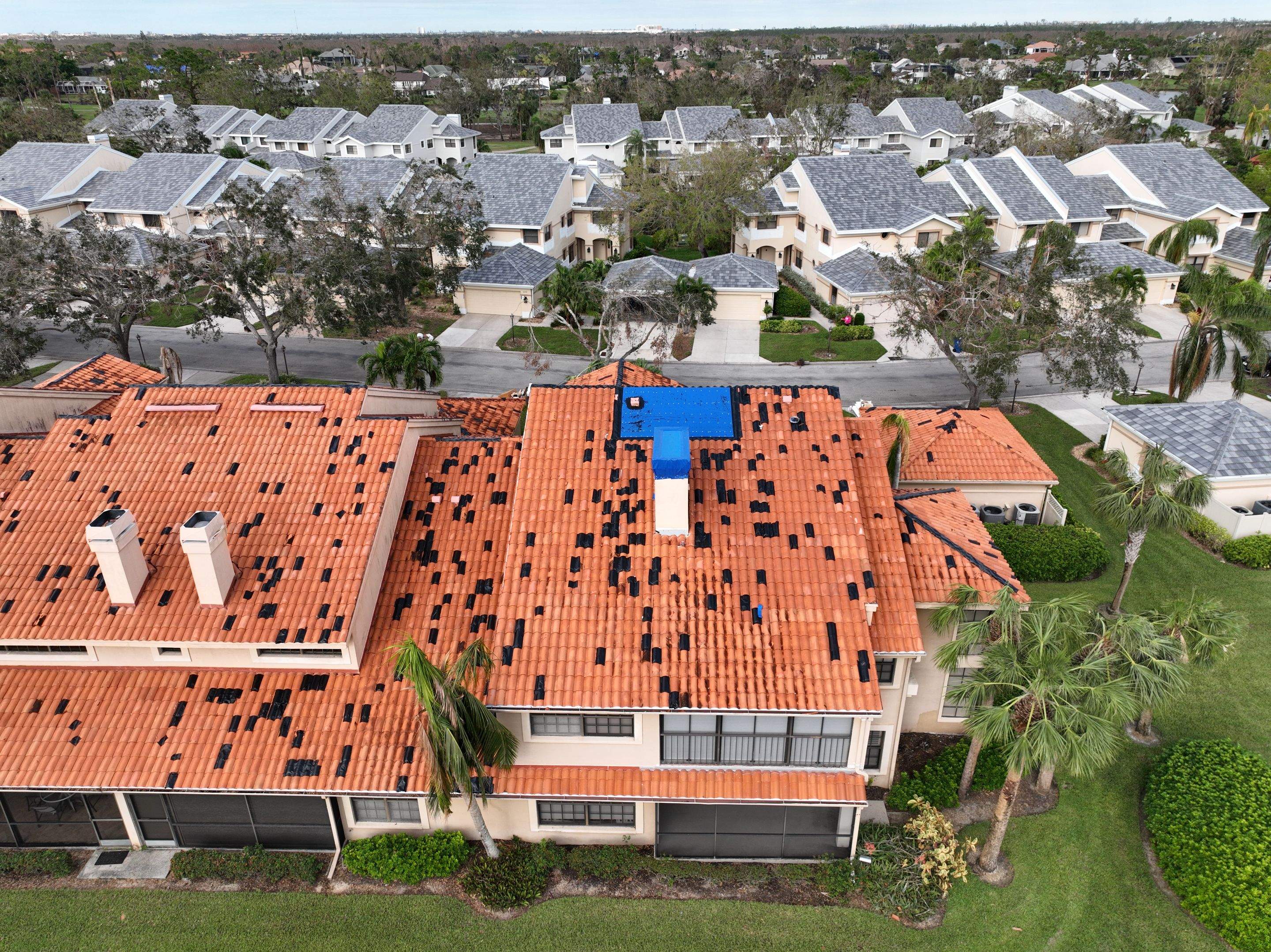
A ROOF DRY-IN PROTECTS THE VULNERABLE AREA WITHIN THE ROOF SYSTEM
A roof dry-in and a roof tarp serve the same general purpose: reducing additional water intrusion until permanent work can begin. They accomplish that purpose in very different ways.
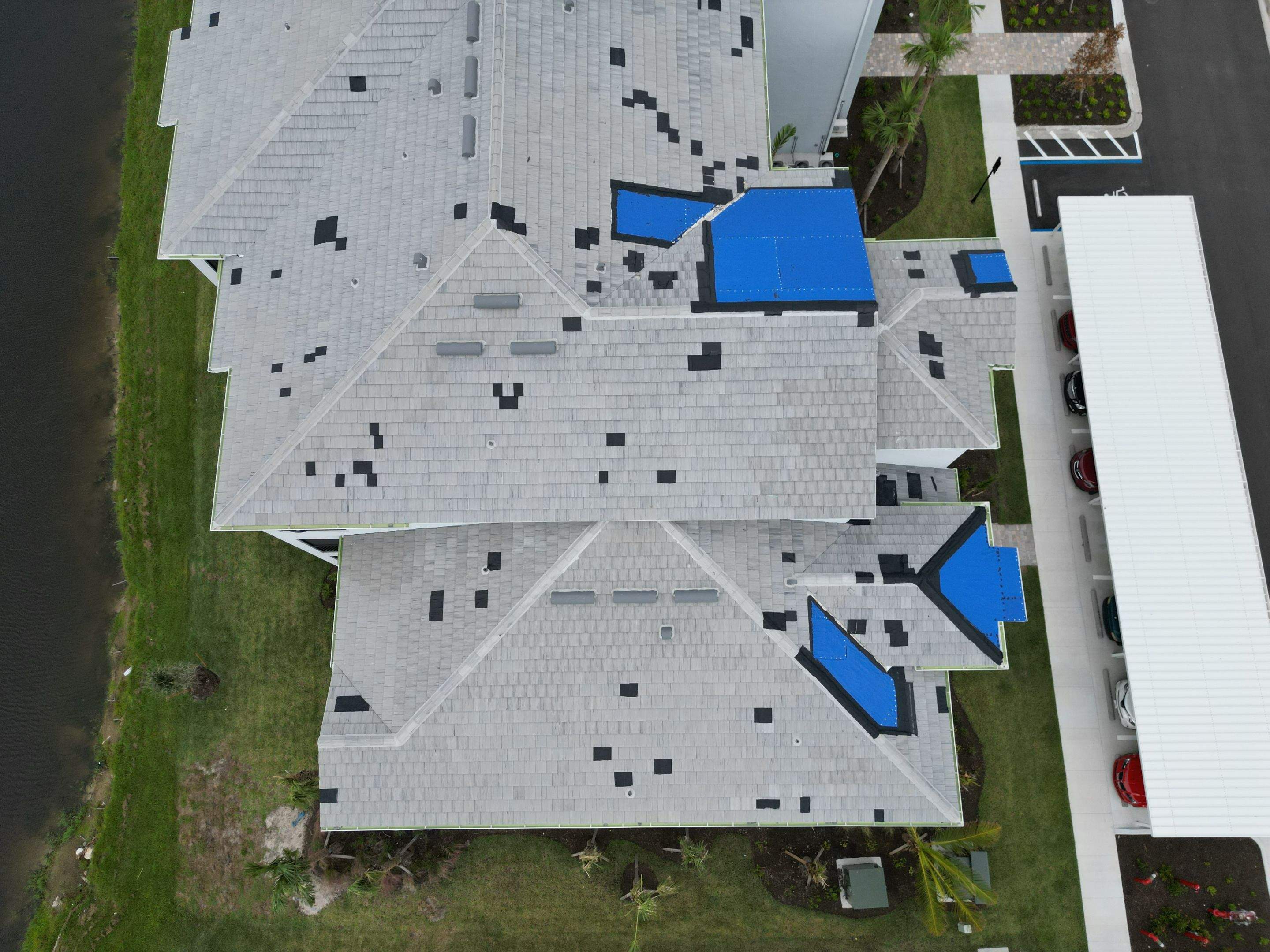
A tarp is placed over the roof surface and secured using weights, battens, fasteners, or a combination of methods. On tile roofs, sandbags are commonly used around the perimeter. The system remains exposed to sun, wind, movement, drainage, and changing weather conditions.
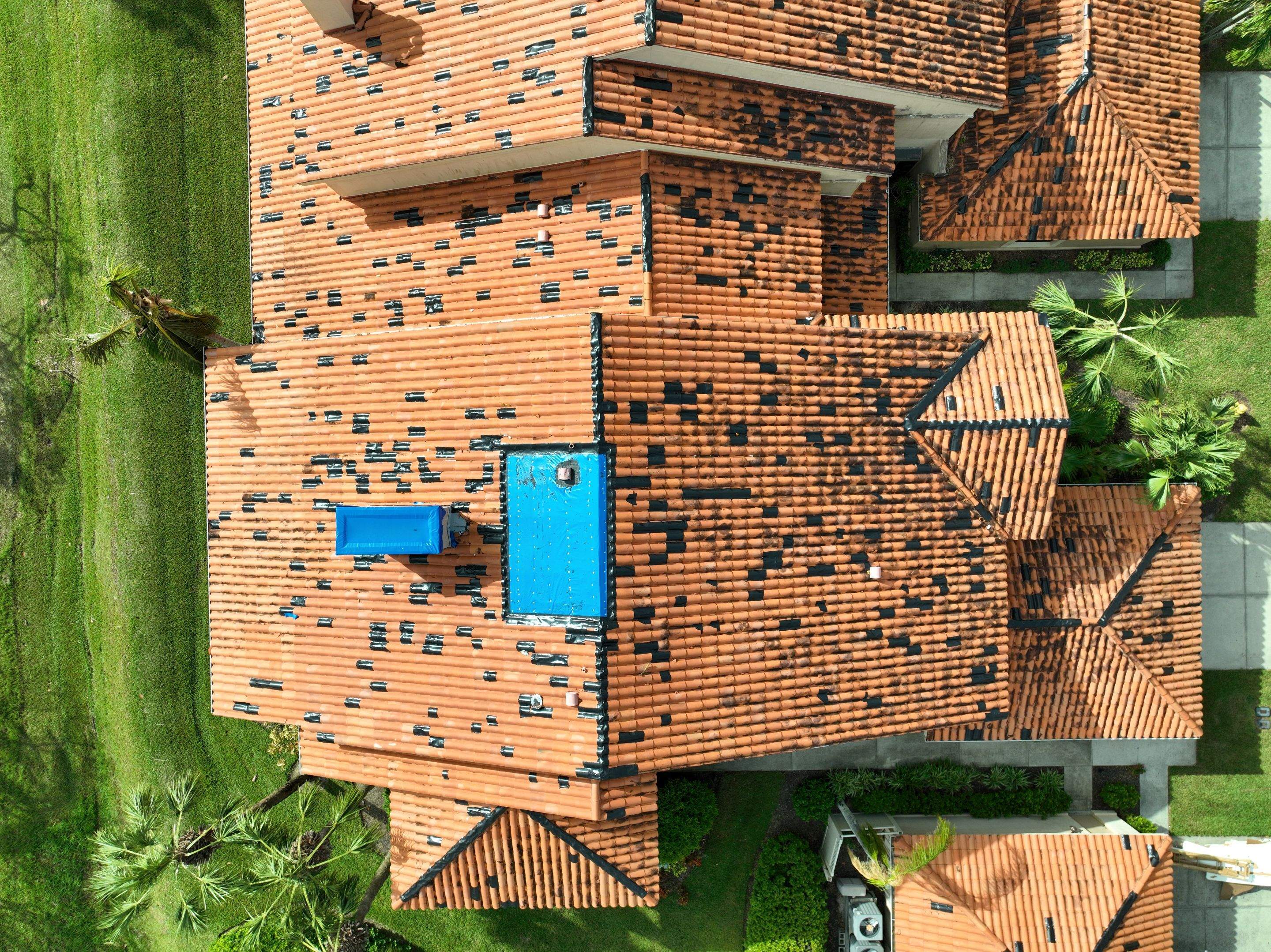
A dry-in requires access to the affected portion of the roof. Tile or other roofing material is removed as necessary, the vulnerable area is exposed, and a temporary membrane or flashing material is installed in connection with the existing system.
This approach allows the contractor to address the damaged section more directly while reducing the amount of loose material exposed on top of the roof.
TEMPORARY PROTECTION HAS TO MATCH THE ACTUAL TIMELINE
Associations often begin the process expecting a roof claim or replacement decision to move quickly.
The roof may be only one part of a much larger property claim. Carriers, consultants, public adjusters, engineers, attorneys, and building-envelope specialists may become involved. Questions involving windows, doors, sliders, interior damage, moisture, and structural conditions can extend the investigation and negotiation.
Meanwhile, the roof still has to protect residents and the building.
Colonial Roofing plans roof dry-ins around the condition of the property and the likely duration of the temporary work. The materials and installation method may cost more than a basic tarp, but they can reduce repeated service calls, displaced coverings, and recurring water intrusion from the same vulnerable area.
TEMPORARY BY DESIGN
A roof dry-in should protect the building while remaining clearly identifiable as temporary mitigation.
That distinction can matter during an insurance claim. Permanent reconstruction performed before the scope has been inspected, documented, or approved may complicate discussions about the roof’s condition and the work still required.
Colonial Roofing documents the existing condition and installs temporary materials appropriate to the mitigation plan. On tile roofs, removed tile may need to remain off the treated section and be stored on site rather than reinstalled over the temporary membrane.
The exact approach should be coordinated with the association’s insurance and claims professionals when a claim is active.
ROOF SYSTEMS WE DRY IN
Colonial Roofing performs dry-in work on:
- Tile roof systems
- Flat and low-slope roof systems
- Metal roof systems
- Shingle roof systems
Each system requires a different approach.
Tile work may require selective removal, storage, and decisions about whether tile can be safely reinstalled. Flat and low-slope roofs require careful evaluation of drainage because the interior stain may be located far from the actual point of entry.
Learn more about how drainage affects condominium flat roof leaks.
WHAT TO EXPECT FROM COLONIAL ROOFING
Our roof dry-in services may include:
- 24/7 intake through our Roof Emergency Services team
- Investigation of the likely water entry point
- Removal of roofing material necessary to access the affected area
- Leak-specific dry-ins connected to the existing roof system
- Preventative treatment of broken, shifted, or missing tile
- Before, during, and after photo documentation
- Reinspection when a claim or replacement timeline extends
- Coordination with association representatives, property managers, and claims professionals
- A direct transition into multifamily roof replacement when the project is approved
A dry-in is temporary work. It should still be planned, installed, and documented with the same level of care as the permanent project that follows it.



Colonial Roofing Blog
Check out our blog for expert insight on multi-family and commercial roofing, covering maintenance, storm recovery, and budget planning.