


.jpg)
.png)




 Here’s what those algae streaks actually mean, and why early attention, cleaning, treatment and maintenance matters so much.
Why Algae Thrives in Florida
Warm temperatures. High humidity. Persistent rain. Shady roof lines. Coastal moisture. All of these combine to create the ideal conditions for algae on your roof to thrive.
You’re more likely to see algae if your roof has:
- North-facing slopes
- Areas that stay damp longer
- Rough or porous surfaces
- Debris or organic buildup
For many homeowners, algae becomes visible long before any structural issue appears, making it an important early indicator to handle quickly.
The Hidden Impact of Algae on Your Roof
Algae is more than an aesthetic problem. Here’s what it does behind the scenes:
1. Heat Retention
Dark streaking absorbs sunlight, raising surface temperature. Hotter roof materials expand and contract more aggressively, adding stress over time.
2. Moisture Trapping
Algae can hold moisture against the roof surface. In Florida’s humidity, that consistent dampness can stress underlayments or expose weak spots.
3. Masking Roof Wear
Algae often appears strongest where water flow is uneven. It may point to areas that need professional evaluation.
4. Aging the Home Visually
Even a structurally sound roof looks older when streaked, which matters for curb appeal and resale.
A trained roofing contractor in Tampa Bay can determine whether algae is simply cosmetic or a warning sign.
Algae vs Mold vs Mildew
Not all staining is algae, and the differences matter.
Algae:
- Dark streaks
- Common in humid, shaded areas
Mold:
- Raised, patchy growth
- Can indicate moisture trapped in decking
Mildew:
- Powdery or light discoloration
- Often tied to poor drainage or ventilation
A single family roofing contractor can best identify which you’re dealing with and recommend the safest treatment.
Safe Treatment Options
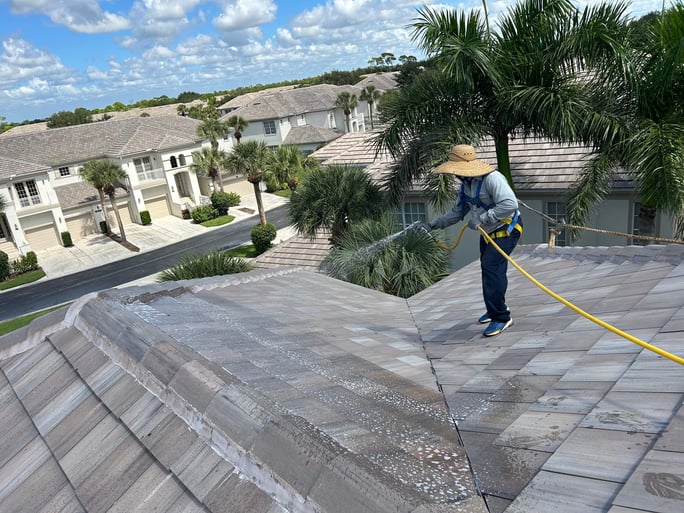
Cleaning a roof the wrong way can cause more damage than algae ever would. Harsh chemicals and pressure washing often void warranties or weaken materials.
Safe, approved treatment typically includes:
- Soft-cleaning methods
- Manufacturer-approved cleaning / treatment agents
- Gentle application to lift staining without stripping protection
- Technicians trained in safe roof-walking practices
This is especially important for older roofs throughout the West Coast of Florida, where pressure washing can quickly cause cracks, leaks, or granule loss.
How a Qualified Roofer Handles Algae
Before cleaning, a professional roofer evaluates the whole system because algae can be either a symptom or a surface-level issue.
A proper inspection includes:
- Documenting algae patterns
- Inspecting shingles, transitions, and decking for weakness
- Recommending ideal cleaning frequency
From there, your roofer helps you build a long-term maintenance plan rather than a one-off cleaning cycle.
Algae streaks may look harmless, but they can reveal how your roof is interacting with heat and moisture. Getting your roof the attention it needs sooner than later can improve curb appeal and potential resale value as well as the lifespan of your roof. For homeowners in Hillsborough and Pinellas, partnering with an experienced roofing contractor in Tampa Bay ensures algae is treated safely and with a focus on long-term roof performance.
.png)