


.jpg)
.png)




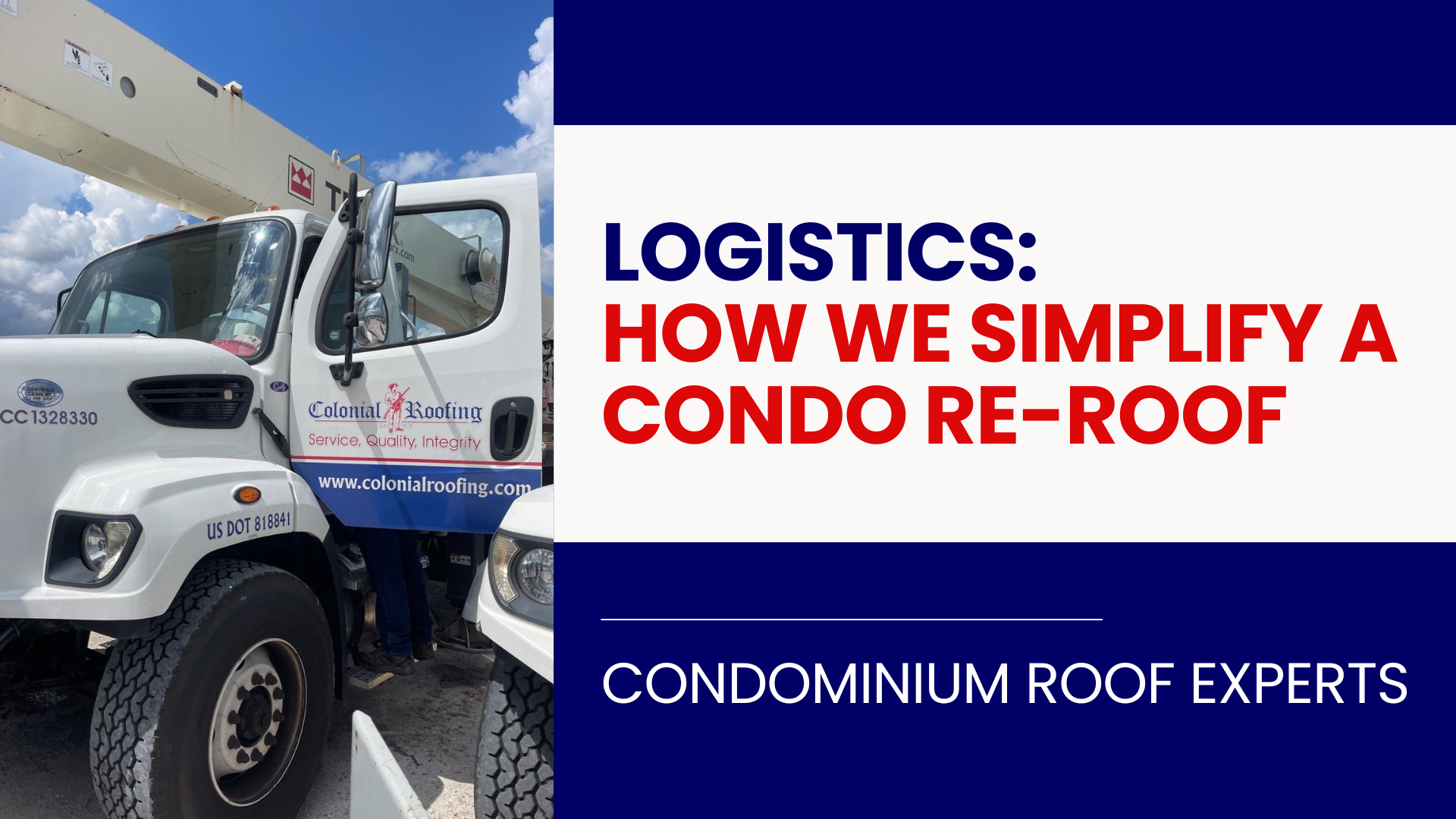
On a single-family home, a reroof is fairly straightforward: one driveway, one delivery, one crew, wrapped up in a day or two. A condominium property has more instruments. A crane, staged materials, disposal containers and several crews move through the community for weeks, while daily life keeps its own rhythm underneath. Mail still gets delivered, amenities stay open, and fire-rescue always has a clear lane.
We treat a large condominium roofing project as a coordination project long before it becomes a production project. The conducting happens before the first note plays. And in our experience, that preparation carries more weight for associations and property managers than they might first realize.
Where the Crane Stands
A crane needs more than an open patch of pavement. The project team has to consider how the equipment enters the property, where it can set up, which buildings it can reach and what stays accessible while it operates. A position that suits one building may sit in the way of parking or traffic when the project moves to the next phase, and the most obvious staging area may double as the route the waste hauler uses every Tuesday.
That is why Colonial begins with an aerial sitemap of the community and choreographs staging long before production starts. The map covers:
- Crane positioning
- Material storage
- Dumpsters and disposal
- Crew and equipment parking
- Resident traffic
- Fire-rescue access
- Routes between buildings
- Areas that will stay untouched
Every one of those placements gets discussed with the HOA representatives and approved in advance, with the impact on the community talked through openly. By the morning work begins, the crane operator is following a plan the board has already seen, rather than making the call from the cab.
Setting the Stage
Parking every container and piece of equipment beside the active building looks efficient on paper. On the ground, the smoother arrangement often separates long-term material storage from the active crane area: the crane works from one location while a container or trailer sits elsewhere on the property, out of everyone's way.
That distinction matters when residents still need to reach their homes, use the community amenities and receive their regular deliveries. It also hands the property manager and board a clear answer when residents ask what each phase will look like. The details of the staging plan can be shared with residents ahead of time, in writing, so every change on the property arrives as a scheduled event instead of a surprise. The more communication moving through the community, the smoother the whole performance feels.
Material Timing Sets the Tempo
Roofing logistics extend well beyond the property line. Before work begins, the project team verifies product specifications, quantities, distributor availability and manufacturing lead times. Custom or less common materials shape when a project can start and how fast it can move.
Color selections carry the same weight. Tile, drip edge, gutters and paint all have to be ordered, and ordering waits on decisions. When the association or property manager communicates the community's selections early, the timeline holds and the trades flow one behind the other.
A quality condominium roofing contractor walks the board through those dependencies at project handoff, so everyone knows which decisions are still open and when each one is due. A small question answered early keeps the entire schedule in rhythm.
Many projects also include vertical-wall work, stucco repair, exterior painting, or condominium gutter, soffit and fascia replacement. Sequence is everything here. Flashing goes in before a wall can be finished, and the painters follow the roofers at a matched pace. When every section moves at the same tempo, the property looks composed from the first building to the last, and no crew ever stands around waiting on another.
Residents Get the Program
At the concert hall, nobody wonders what the orchestra will play next. The program is in your hand. A condominium roofing project deserves the same courtesy.
At the pre-construction meeting, Colonial uses the property aerial and site plan to show the board exactly where equipment will be positioned, which areas will be involved and how the project will move through the community. During production, weekly updates and progress photos give the association a running record of what has been completed and what comes next.
A short note ahead of a crane day, a parking change or the transition into painting lets residents plan their week around the work. One announcement, read at the mailbox, answers the question before dozens of individual inquiries ever get typed.
What a Well-Conducted Project Sounds Like
Most of the coordination behind a successful roofing project is invisible when it is done correctly. Materials arrive right when they are needed. Emergency access stays open. Trades follow one another in sequence, residents know what to expect, and the board receives its update before anyone thinks to ask for one.
None of that is luck. It is the sound of complicated questions being answered months before anyone on the property could hear them.
Colonial Roofing plans large-scale condominium and commercial roofing projects around the property as it actually operates, the daily life as much as the roof areas shown on a proposal. On a complex project, doing the roofing well starts with conducting everything happening around it.
