


.jpg)
.png)




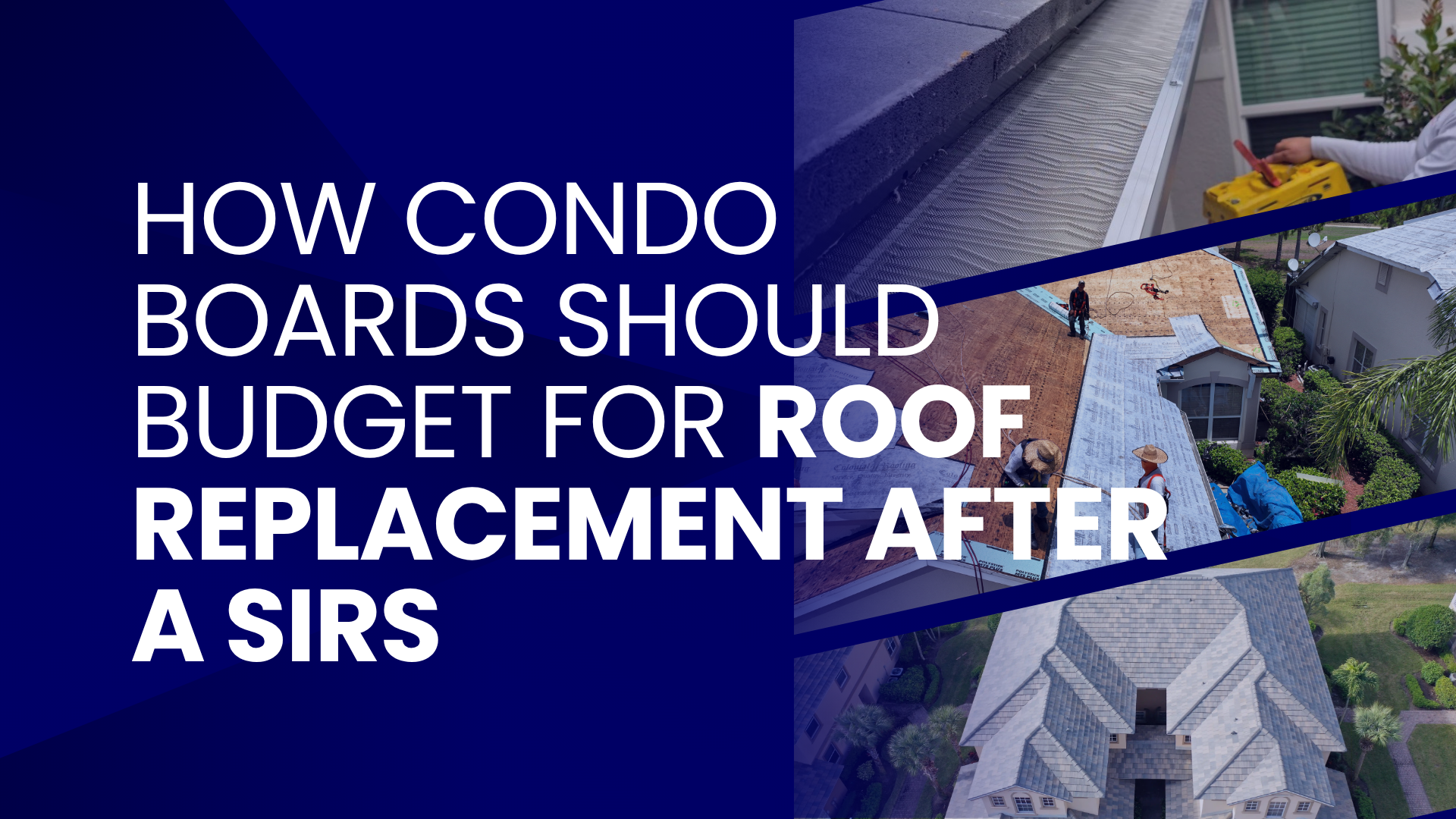
Boards that rely only on a projected replacement year and estimated cost may still face a shortfall. Roofing conditions change. Construction costs change. The scope can also expand once access, code requirements and damaged decking are considered.
Start With the Assumptions Behind the Number
The roofing section of the SIRS should identify the roof’s estimated remaining useful life, estimated replacement cost or deferred maintenance expense and the funding needed to meet that obligation.
Questions to ask include:
- What roof systems and buildings are included?
- Is the installation date documented?
- Were previous repairs or recover systems considered?
- Does the estimate include every roof area?
- What assumptions were made about insulation, decking or drainage?
- Has the roof experienced storm damage or recurring leaks since the inspection?
The goal is not to challenge the reserve professional’s work. It is to determine whether the financial estimate still reflects the physical roof and likely project.
Do Not Confuse Remaining Useful Life With Guaranteed Performance
If a study estimates that the roof has five years of useful life remaining, that does not guarantee five problem-free years. It also does not automatically mean the roof must be replaced on the first day of year six.
Remaining useful life is an informed estimate based on conditions visible at the time of the study.
Preventive maintenance may help a roof perform longer. Undetected moisture, drainage problems, storm damage or repeated repairs may shorten the timeline.
Boards should review the roof regularly and update their planning when conditions materially change. Waiting for the next SIRS cycle may leave the association working from outdated assumptions.
Understand What the Replacement Estimate Includes
The visible roofing material is only one part of a condominium roof replacement.
The final cost may be affected by:
- Access, staging and crane requirements
- Removal and disposal of the existing system
- Damaged roof decking and other unforeseen costs
- Insulation and energy-code requirements
- Drainage corrections
- Flashings, penetrations and perimeter details
- Rooftop equipment
- Protection of residents and property
- Permitting and inspection requirements
- Wind mitigation or roof-to-wall connection work
If the reserve estimate does not account for likely project conditions, the association may be funding an incomplete scope.
Updated budgetary information before the replacement year gives the board time to identify those gaps without making decisions during an emergency.
Know How the Reserves May Be Funded
For associations required to complete a SIRS, Florida law generally does not allow members to waive or reduce required reserves for covered components in budgets adopted on or after December 31, 2024.
Depending on the association’s circumstances and required approvals, reserves may be funded through regular assessments, special assessments, lines of credit or loans.
The appropriate structure is a legal and financial decision. Boards should work with association counsel, accountants and financial advisers to evaluate their options.
The roofing contractor’s role is to clarify the condition, likely timing and realistic scope behind the amount being funded.
Build a Roof Plan Before There Is a Crisis
A practical roof reserve plan should include three ongoing activities:
Document the Condition
Track leaks, repairs, drainage concerns and recurring problem areas.
Maintain the System
Use a structured roof maintenance plan to address minor issues and reduce preventable deterioration.
Revisit the Assumptions
Compare the reserve study with current conditions and current budgetary pricing. If the likely project changes, the association may need guidance on whether the SIRS should be updated.
Better Information Creates Better Options
Associations have the most flexibility before the roof becomes an emergency.
Early planning gives a board time to communicate with owners, refine the scope, review financing and select qualified contractors. It also reduces the risk of discovering that the association reserved for a simplified estimate rather than the project the property actually needs.
Colonial Roofing helps Florida condominium associations and community association managers understand existing roof conditions, plan preventive maintenance and prepare for large-scale condo roof replacement.
The purpose is not to replace the SIRS. It is to make sure the association’s roofing plan remains connected to the real building above it.
This article is provided for general educational purposes and is not legal, engineering, reserve-study or financial advice.
