


.jpg)

.png)





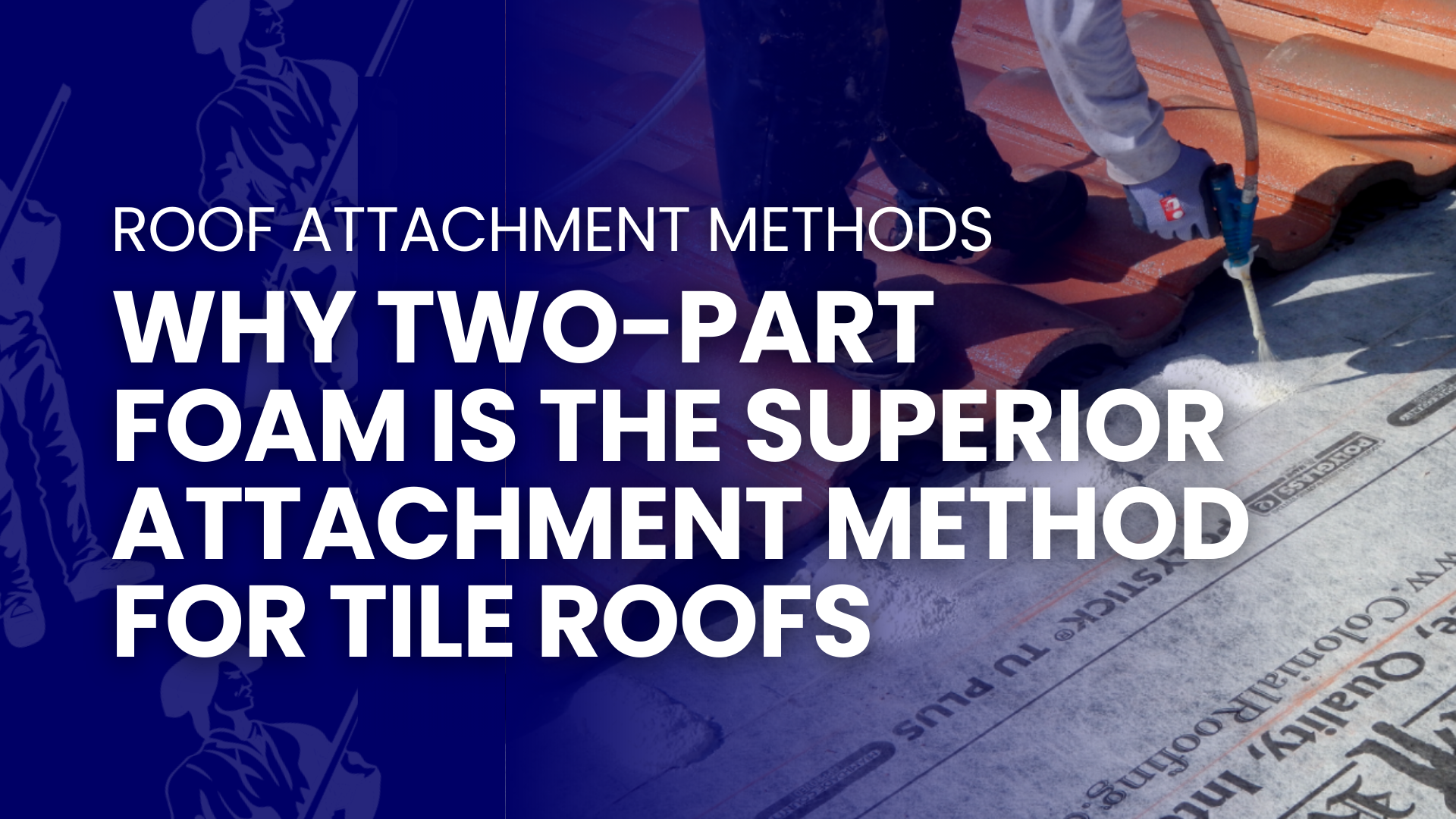
How Two-Part Foam Tile Attachment Works
Two-part foam systems use two separate chemical components that mix together during application to create a polyurethane adhesive.
When the two components combine, they trigger a chemical reaction that causes the foam to expand and cure rapidly. The foam forms a dense adhesive pad beneath the tile, bonding it to the underlayment or roof deck.
Unlike mechanical fasteners, which secure the tile at a single point near the top, foam attachment distributes the bond across a larger area under the tile.
This helps stabilize the tile and reduce movement during high wind events.
Because the chemical reaction controls the curing process, two-part foam expands more consistently than foam systems that rely on environmental moisture.
Why Consistent Expansion Matters
One of the biggest advantages of two-part foam is predictable performance during installation.
With one-part foam products, the curing process relies on moisture in the air. Temperature, humidity, and surface conditions can influence how the foam expands and bonds to the tile.
Two-part foam systems do not rely on ambient moisture. Instead, the chemical reaction between the two components drives the curing process.
This controlled reaction produces a denser and more consistent foam structure, which can result in a stronger bond between the tile and the roof surface.
For roofing professionals, this consistency can help ensure that the attachment system performs as expected across the entire roof.
Improved Wind Resistance and Tile Stability
Tile roofs must withstand significant wind uplift forces during storms. As wind moves across the roof surface, it creates pressure that attempts to lift the tiles upward.
If tiles are allowed to move too much, they can begin to vibrate or shift. This movement, often referred to as tile chatter, can weaken attachment points over time and allow wind to work its way underneath the tile.
Because foam attachment bonds the tile across a broader area, it helps reduce vibration and stabilize the tile during high wind events.
Two-part foam systems are often used in engineered tile assemblies designed to achieve higher wind uplift ratings, making them a common choice for projects where storm performance is a priority.
When Two-Part Foam Is Used on Tile Roofs
Two-part foam systems are commonly used on both residential homes and multi-family condominium properties throughout Florida.
They are often selected when contractors or engineers want the most consistent adhesive bond and enhanced tile stability during severe weather.
While other attachment methods can still meet building code requirements, two-part foam is frequently considered a premium option because of its predictable curing process and strong bonding performance.
When evaluating tile roof replacement options, it is important for property owners and condominium boards to understand how different attachment methods perform.
The attachment system used on a tile roof can have a significant impact on how well the roof performs during hurricanes and how long it continues to protect the building.

.png)